Advancing fine-grained diagnostic assessment in education and psychology
← All Research AreasCognitive Diagnosis Models (CDMs) are a family of psychometric models designed to classify individuals according to a set of discrete latent attributes or skills — providing fine-grained diagnostic information that goes beyond a single ability score.
Unlike traditional IRT models that produce a single continuous ability estimate, CDMs yield an attribute mastery profile that indicates which specific skills or knowledge components a learner has or has not mastered. This makes them particularly powerful for formative assessment and personalized learning.
Our lab has made substantial contributions to the development, evaluation, and application of CDMs, including the widely used Generalized DINA (G-DINA) model framework. Our work spans two broad directions: advancing the statistical and methodological foundations of CDMs, and applying them in diverse educational and psychological contexts.
The GDINA R package implements a wide range of CDMs and provides tools for Q-matrix estimation, model comparison, and classification.
View Software →Developing and refining the statistical foundations of cognitive diagnosis
Extending CDM frameworks to accommodate complex response processes, including response time, process data, polytomous responses, and disengaged behaviors.
Developing rigorous methods for Q-matrix estimation, model fit evaluation, and model selection to ensure reliable and valid diagnostic inferences.
Bridging cognitive diagnosis and item response theory frameworks to leverage complementary strengths — combining continuous ability estimation with discrete attribute classification.
Ma, W., Sorrel, M. A., Zhai, X. & Ge, Y. (2024) · DOI: 10.1111/jedm.12383
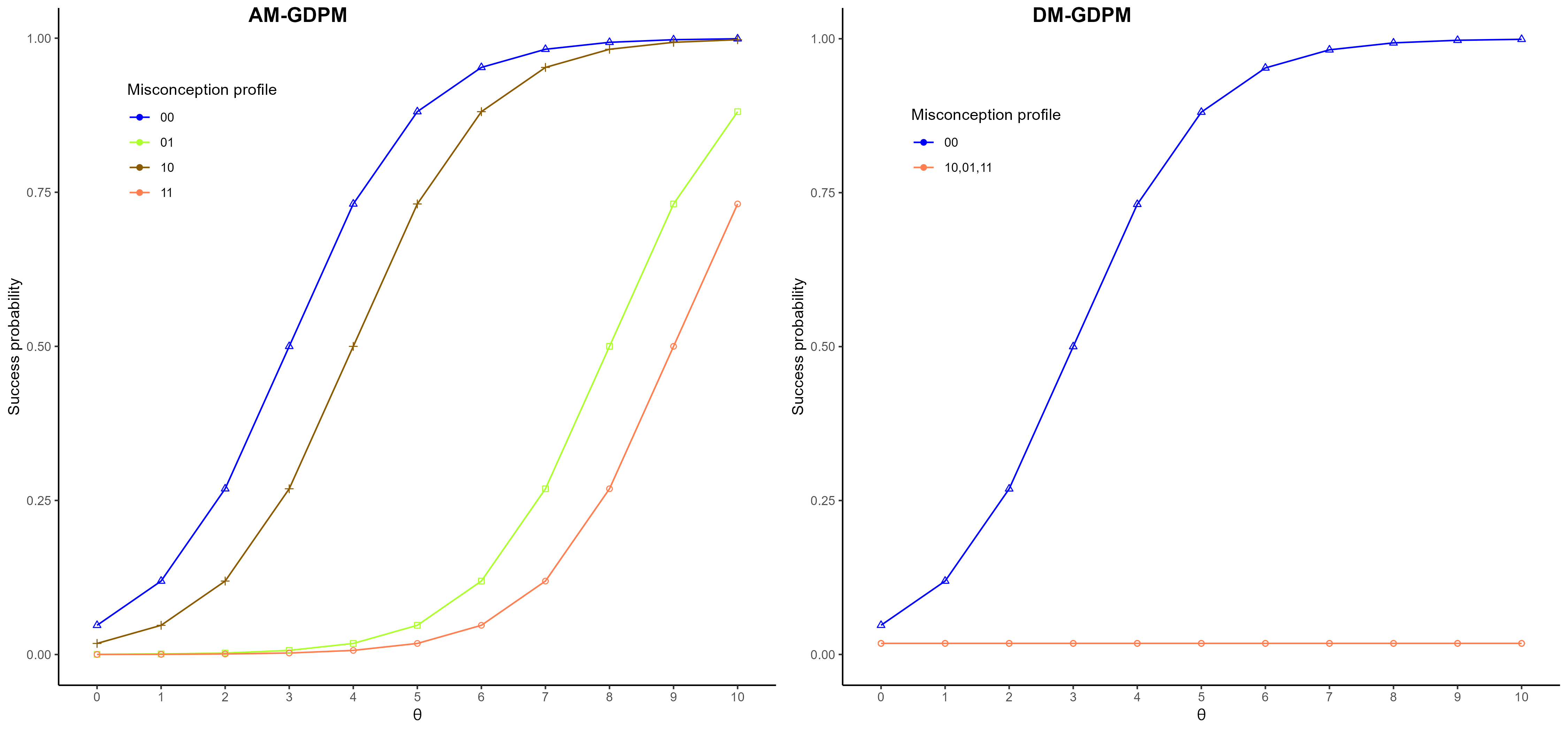
Traditional assessments measure either a student's overall ability or diagnose specific misconceptions — rarely both. This paper proposes the Generalized Dual-Purpose Model (GDPM), which simultaneously estimates a continuous latent ability (θ) and classifies discrete misconception profiles from ordinary binary item responses.
The key insight is that misconceptions shift an examinee's item characteristic curve downward: a student holding a misconception scores systematically lower on relevant items at the same ability level, creating a detectable signal that the model exploits. Two variants are proposed — the AM-GDPM, where each misconception profile has its own ICC, and the DM-GDPM, which collapses profiles for parsimony.
Findings: Simulation studies confirm the model accurately recovers both ability and misconception profiles. Application to science assessment data identified distinct misconception patterns that ability scores alone would miss.
Lugu, B., Guo, W., Ma, W. (2025) · DOI: 10.3758/s13428-025-02734-y
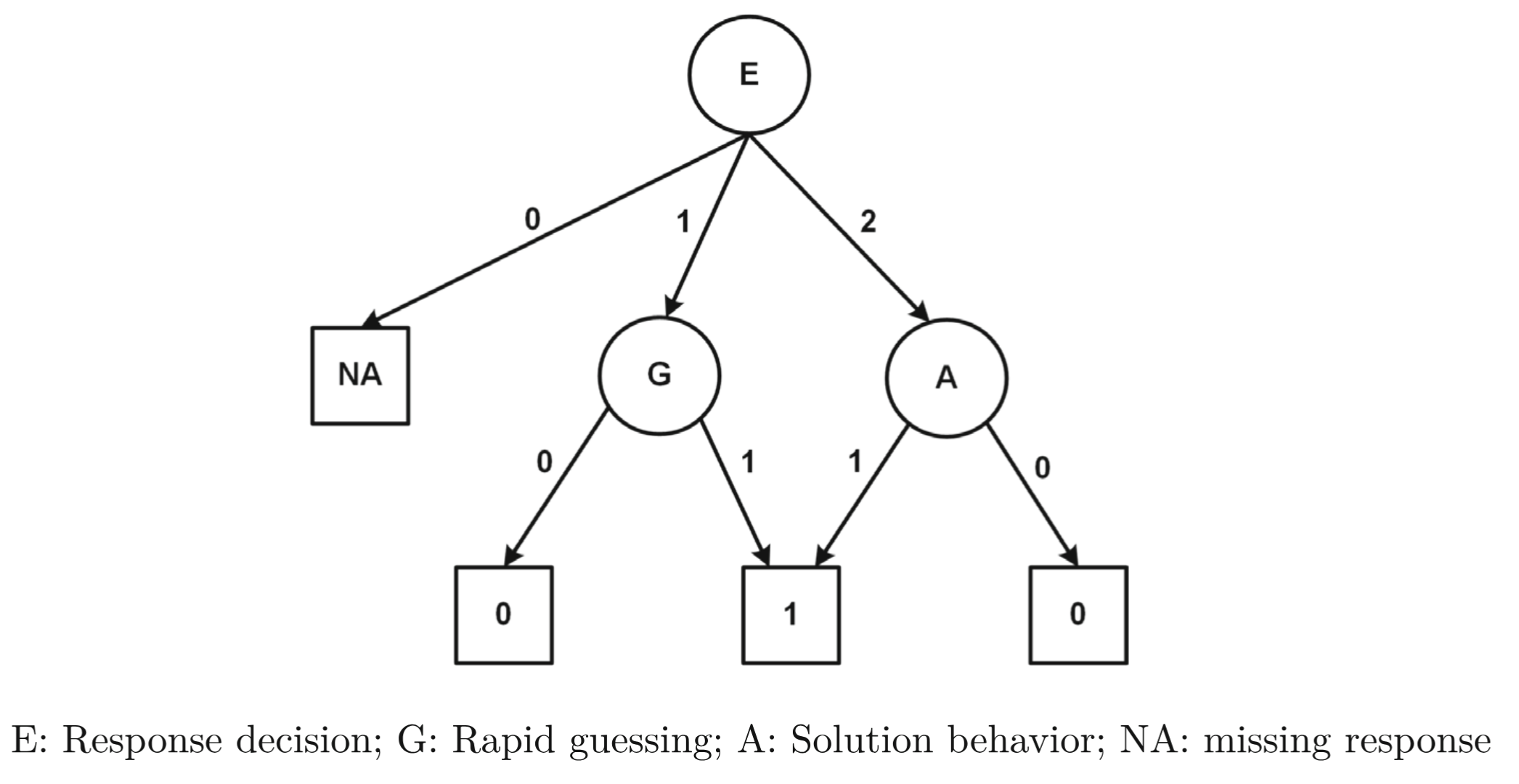
In low-stakes assessments, some examinees disengage — skipping items or rapid-guessing without reading — which contaminates cognitive diagnostic scores. Standard CDMs cannot distinguish a wrong answer due to skill deficiency from one due to disengagement, leading to biased attribute classifications.
This paper embeds a hierarchical response-decision process directly into the CDM. Each response is first classified by a latent engagement node (E): non-response (NA), rapid guessing (G), or genuine solution attempt (A). Only solution-behavior responses feed into the diagnostic component, cleanly separating measurement from motivation.
Findings: The model substantially reduces classification error compared to ignoring disengagement, and correctly recovers attribute mastery profiles in both simulations and a real large-scale assessment dataset.
Applying cognitive diagnosis in education, health, and behavioral sciences
Deploying CDMs in large-scale and classroom assessments to deliver actionable diagnostic feedback on student skill mastery.
Using CDMs to profile symptom patterns in mental health and medical contexts, supporting diagnostic classification beyond traditional cut-score approaches.
Adapting CDMs to process data from interactive and game-based environments to infer fine-grained skill acquisition during play.
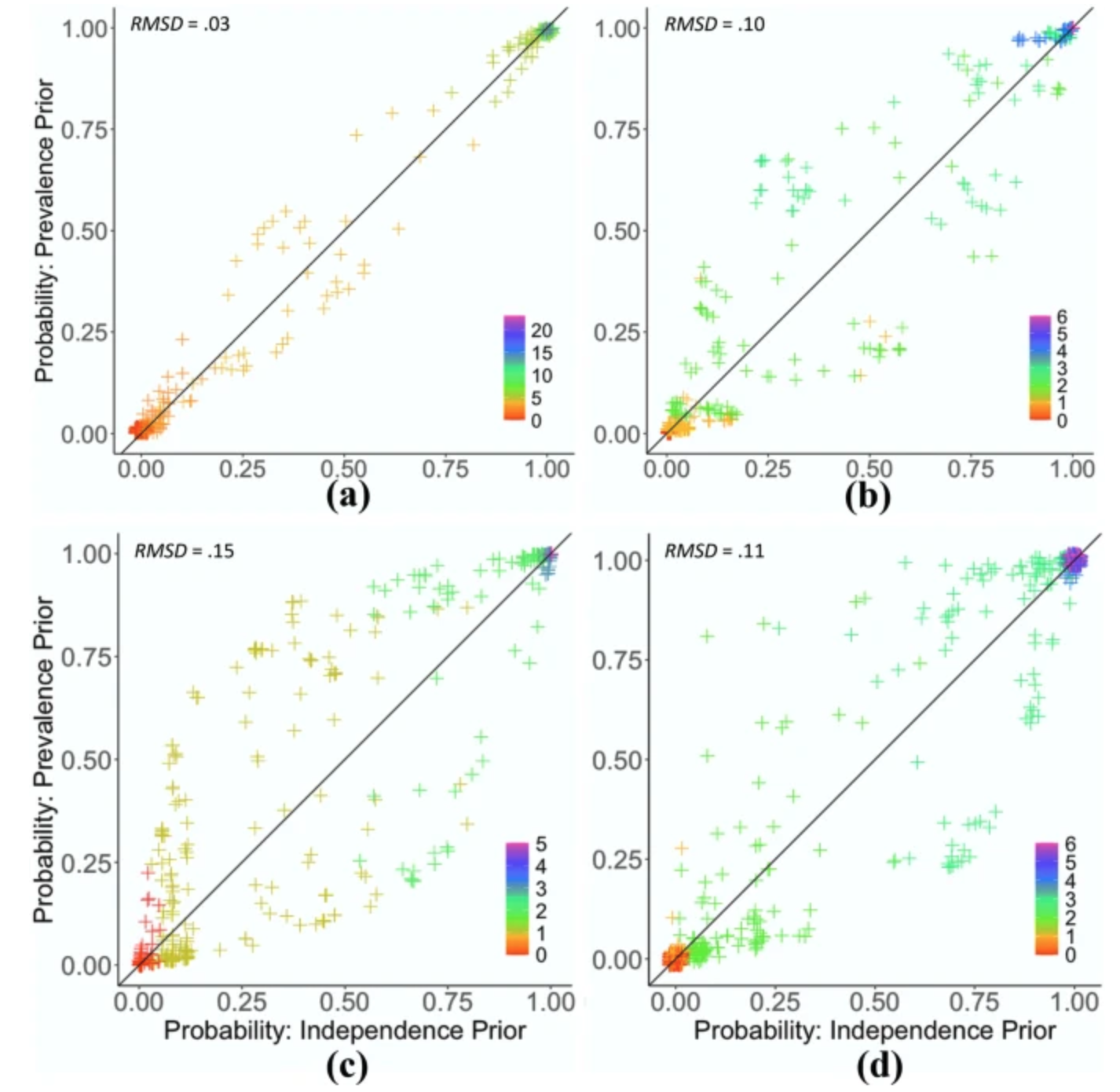
Tan, Z., de la Torre, J., Ma, W., Huh, D., Larimer, M., & Mun, E-Y. (2023) · DOI: 10.1007/s11121-022-01346-8
Mental health symptom instruments (e.g., for depression, anxiety, alcohol use) are typically scored by summing item responses into a total — discarding the pattern of which specific symptoms are present. This tutorial demonstrates how CDMs can be applied to existing item-level responses to recover symptom profiles: which particular symptoms co-occur, at what severity levels, and in what combinations.
Applied to a college student dataset on alcohol use and mental health, the approach reveals subgroups with distinct symptom configurations that a total score obscures. The paper is written as an accessible tutorial for prevention science researchers without a psychometrics background.
Findings: CDM-based profiles provide richer information than sum scores, identifying subgroups with similar totals but different symptom patterns — with distinct implications for targeted interventions.
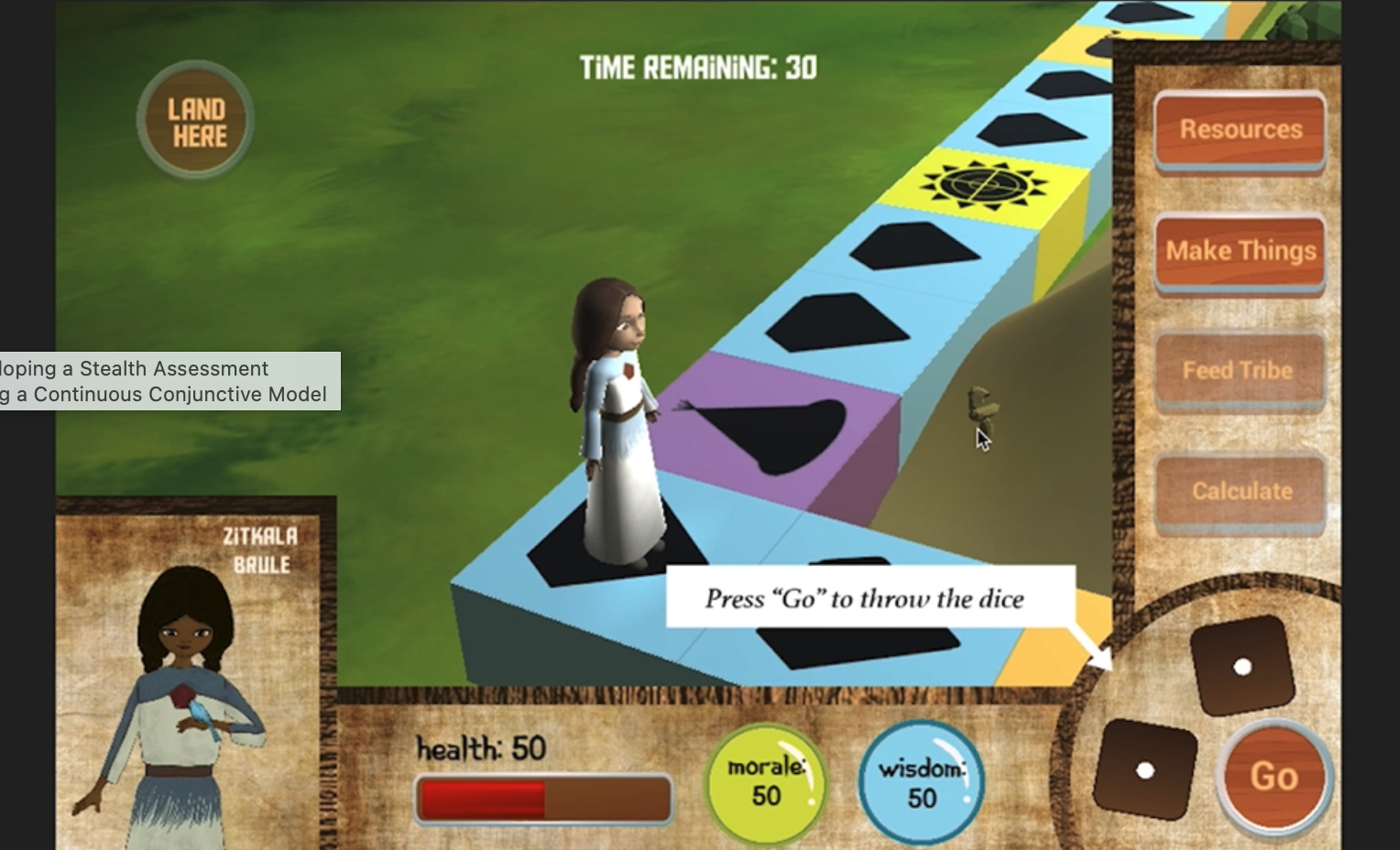
Yu, J., Ma, W., Moon, J., & Denham, A. R. (2022) · DOI: 10.18608/jla.2022.7639
Game-based learning environments generate rich behavioral data — player actions, sequences, and outcomes — but translating this data into meaningful skill diagnostics is non-trivial. This paper develops a learning analytic system that integrates a continuous conjunctive CDM to track students' attribute mastery as they progress through an educational game.
The system maps in-game events to cognitive attributes defined in a Q-matrix, then estimates skill acquisition in real time. Applied to an educational game on fractions, the model successfully tracks which skills students have mastered and identifies where they struggle.
Findings: The CDM-based analytic system produces reliable diagnostic profiles from game data that align with external assessments, demonstrating the feasibility of unobtrusive, game-embedded cognitive diagnosis.